The “Teach It to Learn It” Model: Why Explaining Forces Clarity
Ever had to explain something you thought you understood… only to realize halfway through that you were basically hand-waving and mumbling? Welcome to one of the most effective (and humbling) learning models out there: Teach It to Learn It.
The premise is simple. If you can’t explain it clearly, you don’t really know it. And if you can explain it clearly, congratulations! You’ve just cemented the knowledge in your own brain.
It’s learning by teaching. And it works like a charm.
Why Explaining Sharpens Understanding
When you explain an idea to someone else, you’re forced to:
- Organize your thoughts (no more relying on “I’ll just wing it”).
- Simplify the complex (turn jargon into plain language).
- Spot the gaps in your own knowledge (hello, awkward silence).
This is known as the protégé effect: learners who teach retain more and understand better than those who don’t. It’s like stress-testing your brain.
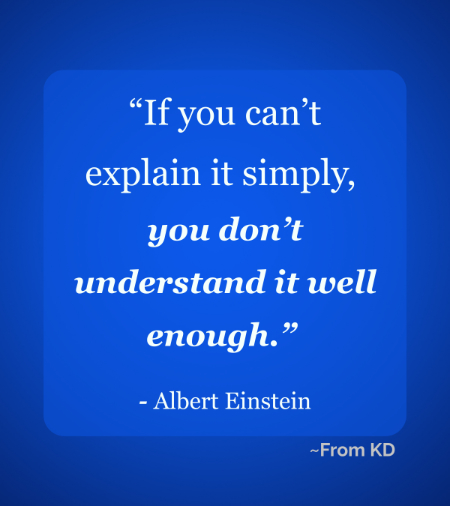
As Albert Einstein allegedly put it: “If you can’t explain it simply, you don’t understand it well enough.”
Real-World Examples
- Students: Ever notice you only really grasp the math problem when you explain it to a classmate?
- Workplace: Training a new hire makes you master the workflow you’d been doing on autopilot.
- Everyday life: Try explaining how Wi-Fi works to a kid. Note: “It’s magic” is not a satisfying answer.
Each time you teach, you force yourself to translate abstract knowledge into something another human can use. That translation is where true learning happens.
How to Use “Teach It to Learn It”
You don’t need a classroom or a whiteboard. Just these simple steps:
- Pick your learner. This could be a friend, colleague, or even your future self. (Yes, explaining in a journal counts.)
- Break it down. Start as if the other person has zero context. Use plain words, not jargon.
- Notice the stumbles. If you can’t explain a part smoothly, that’s your weak spot. Go back and relearn it.
- Refine the story. Each retelling gets sharper and simpler.
- Bonus Step: Record yourself explaining it, then listen back. Nothing reveals fuzzy thinking faster than hearing your own rambling.
Why This Works So Well
Explaining is active learning. It turns passive absorption into active processing. And active processing equals stronger memory, better understanding, and a serious boost in confidence.
Think of it this way: Studying is like reading the recipe. Teaching is like cooking the meal. Guess which one sticks?
Conclusion
The next time you want to master something, don’t just read it, watch it, or highlight it. Teach it. To a colleague, a kid, your dog, or the bathroom mirror.
Because explaining forces clarity. And clarity is where real learning happens.
Next Steps
Want to learn something new and then teach it to others? (Trust me, we could use more critical thinkers!) From KD Critical Thinking Guides will help you learn to use your own judgement more effectively, make decisions better, and question the things that don’t make sense.
Browse all From KD Critical Thinking guides