
The 5 Thinking Traps That Sabotage Smart People
Even the smartest minds trip over these. Often.
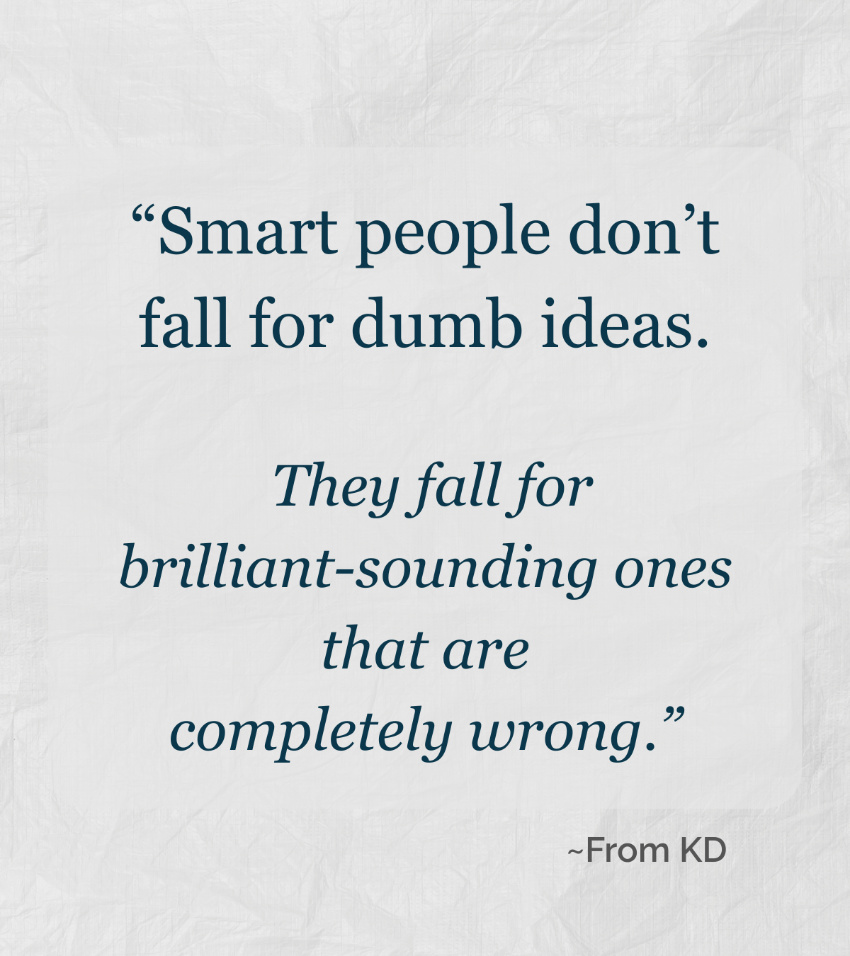
You don’t need to be uneducated or gullible to fall for bad thinking. In fact, the more intelligent you are, the more prone you may be to reasoning yourself into really poor decisions.
Sound familiar? That’s because smart people tend to:
- Trust their intuition too quickly
- Rely on past successes that don’t apply this time
- Overcomplicate instead of clarify
The result? Your brain talks itself into one or more thinking traps. And then feels brilliant about it.
Let’s break five of the most common ones down.
1. Confirmation Bias
“I already have a theory. I’m just here for evidence.”
Once your brain decides what it wants to believe, it filters everything else out. You Google to confirm, not to explore. You listen for agreement, not accuracy. And before you know it, you’re building a decision on selective facts.
Fix: Ask yourself, “What would disprove this idea?” (Then actually look for it.)
2. Overthinking Loop
“Let me analyze this into oblivion.”
You want to make the right choice…
… so you keep researching
… keep comparing
… keep stalling
Until you’re no longer making a decision. You are avoiding one.
Fix: Use the 3-question filter from my Critical Thinking Essentials to reduce mental noise and take action.
3. False Urgency
“I have to decide right now.”
This is how sales funnels, social media, and manipulative people win. They rush you past your brain’s pause button. Urgency isn’t always fake, but it often is.
Fix: Build a 10-second pause habit. Yes, literally. Give your brain space to blink.
4. Thinking = Talking = Truth
“They sound confident, so they must be right.”
A loud opinion isn’t always a smart one. We confuse volume with credibility. Especially online.
Fix: Fact-check confidently delivered nonsense.
Then fact-check your own assumptions with equal energy.
5. Mental Shortcuts Gone Wild
“It worked before, it’ll work again.”
We love efficient thinking. But mental shortcuts (heuristics) only help when the patterns match. And most of life doesn’t come with clear patterns.
Fix: Ask: “What’s different about this context?”
That one question can stop a mistake before it starts.
Want to Catch These Traps Before You Fall Into Them?
That’s exactly what I designed Critical Thinking Essentials to help with. It’s a short, focused guide with zero fluff—just the thinking tools that actually help:
- Spot your own bias
- Ask better questions
- Avoid trap-logic (like the ones above)
Or start free with the Free Critical Thinking Habit Tracker and begin rewiring your everyday mental habits:
Thinking smart isn’t about being perfect.
It’s about being aware. And knowing what to watch for is half the battle.