
From Chaos to Clarity: How Business Guides Save Time and Money
Business guides can be your unsung heroes. That’s okay. They don’t mind.
If you’ve ever felt like your business runs on sticky notes, hallway conversations, and a shared sense of “winging it,” congratulations. You’re in good company. Most organizations spend more time reinventing the wheel than rolling it forward.
The fix isn’t a magic app or another “all-in-one” platform. It’s something older, simpler, and far more effective: guides.
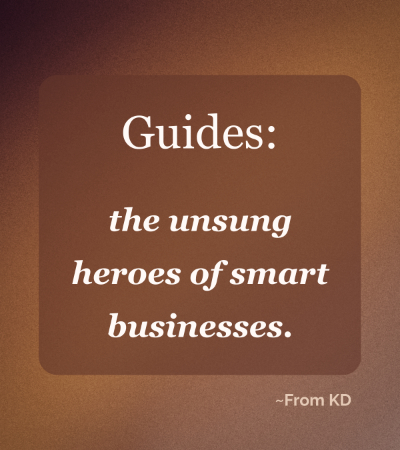
Guides are the unsung heroes of smart businesses. They take scattered knowledge and put it where everyone can find it. They reduce wasted time, protect against costly mistakes, and, let’s face it, save your sanity.
Why Guides Work (and Chaos Doesn’t)
Without guides, people guess, improvise, or interrupt someone else for answers. Multiply that across weeks, months, and teams, and you’re looking at thousands of hours (and dollars) lost to confusion.
Guides, on the other hand, create clarity:
- They cut repetition. One well-written guide replaces dozens of “quick questions.”
- They reduce mistakes. Teams stop relying on memory and start relying on proven steps.
- They scale knowledge. Expertise doesn’t vanish when someone leaves. It stays.
As the old business saying goes: “If it’s not written down, it doesn’t exist.”
Types of Guides Businesses Can Use
This is where the lightbulbs go off. Guides aren’t one-size-fits-all; they’re flexible tools that can support both customers and teams.
Customer-Facing Guides:
- Product setup or onboarding guides
- Step-by-step “how-to” tutorials
- Troubleshooting guides (that prevent unnecessary support tickets)
- Buying guides to help customers choose the right option
- Quick-start PDFs or “getting the most out of… ” resources
- Educational guides that position you as the trusted expert
Internal / Team-Facing Guides:
- Standard operating procedures (SOPs)
- Onboarding guides for new hires
- Project handoff checklists
- Style guides for writing, branding, or customer communication
- Sales playbooks (consistent messaging, less “freestyling”)
- Crisis-response or escalation guides (so no one panics when things go sideways)
Notice a theme? Guides take the recurring and make it repeatable.
The Payoff: Time, Money, and Morale
- Time: Fewer interruptions, fewer “Where’s that file again?” conversations.
- Money: Mistakes cost less because fewer of them happen in the first place.
- Morale: Teams feel confident when they know where to look instead of guessing.
A guide doesn’t just solve problems, it prevents them. And prevention, in business, is the most underrated form of profit.
Conclusion
From chaos to clarity, guides are the quiet force that keeps businesses moving smoothly. They save time, reduce costs, and turn guesswork into confidence. If your business feels stuck in “wing-it” mode, the answer isn’t another app. It’s simply writing things down—clearly, consistently, and in a way people can use. In short: guides turn chaos into clarity.
If your business lacks cohesive guides (either external-facing or internal-facing), and you need help organizing and designing helpful guides, please contact me here.