
How to Use Guides to Stand Out in a Crowded Market
Every market feels crowded right now. Everyone is a “thought leader.” Everyone has a “framework.” Everyone has a “system” (usually with an acronym that doesn’t quite fit the words).
How do you stand out without adding to the noise? Here’s a simple, underused answer: guides.
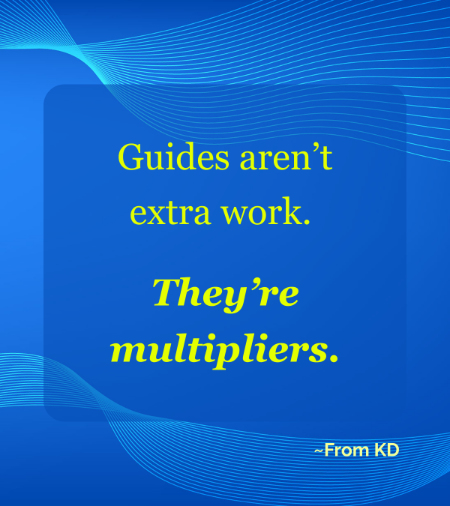
Why Guides Work When Everything Else Blends In
Think about the last time you scrolled through LinkedIn. Posts, memes, polls, yet another “5 steps to…” carousel. Forgettable.
Now think about when you’ve seen a practical resource that you could actually use—a downloadable checklist, a process explained clearly, or a short guide that answered the exact question you had.
Different reaction, right? You saved it. Maybe you even shared it.
That’s the power of guides: they don’t just say you’re an expert, they show it. Read on to learn how to use guides to stand out.
Three Ways Guides Cut Through the Noise
1. They Solve Real Problems
Most marketing content is “thoughts.” Guides are “tools.” People don’t hire ideas, they hire solutions. A guide positions you as someone who knows how to fix things, not just talk about them.
2. They Stick Around
A post gets 48 hours of life (if you’re lucky). A guide sits in someone’s files, bookmarked, or pinned to their team Slack channel. That means your brand keeps whispering, “Hey, remember me?” long after the scroll has moved on.
3. They Scale Your Authority
One guide can circulate inside a company. You wrote it for one reader, but it gets passed to their boss, their team, their “we should try this” group chat. That’s reach you can’t buy.
Or take a coffee brand. Instead of just selling beans, they give out a guide on “How to Brew Barista-Level Coffee at Home.” The customer doesn’t just see beans, they see expertise. And expertise sells.
How to Use Guides Without Becoming Boring
This is where most people get it wrong. They hear “write a guide” and immediately imagine 27 pages of jargon that no one but their cat will read. Don’t do that.
Instead:
- Keep it short. Three to ten pages is plenty.
- Make it specific. Solve one problem clearly.
- Use plain English. If it sounds like a term paper, delete it.
- Give it personality. A guide that sounds human will get read. A guide that sounds corporate will get filed.
The Quiet Differentiator
In a crowded market, shouting louder rarely works. Clarity does. And a guide is just clarity, packaged.
So if you want your business to stand out, don’t crank up the volume. Hand someone a tool they’ll actually use. That’s how you stop blending in and start being remembered.